AI-Enabled Content Governance Systems
At T-Mobile, Michael led the design and deployment of internal AI-enabled language tools that supported brand voice governance across both T-Mobile and Metro by T-Mobile. The work centered on stylometric brand voice profiling—analyzing sentence structure, tone, rhythm, and lexical patterns to model how each brand communicates at a measurable level rather than through abstract guidelines alone.
Systems Design & Implementation
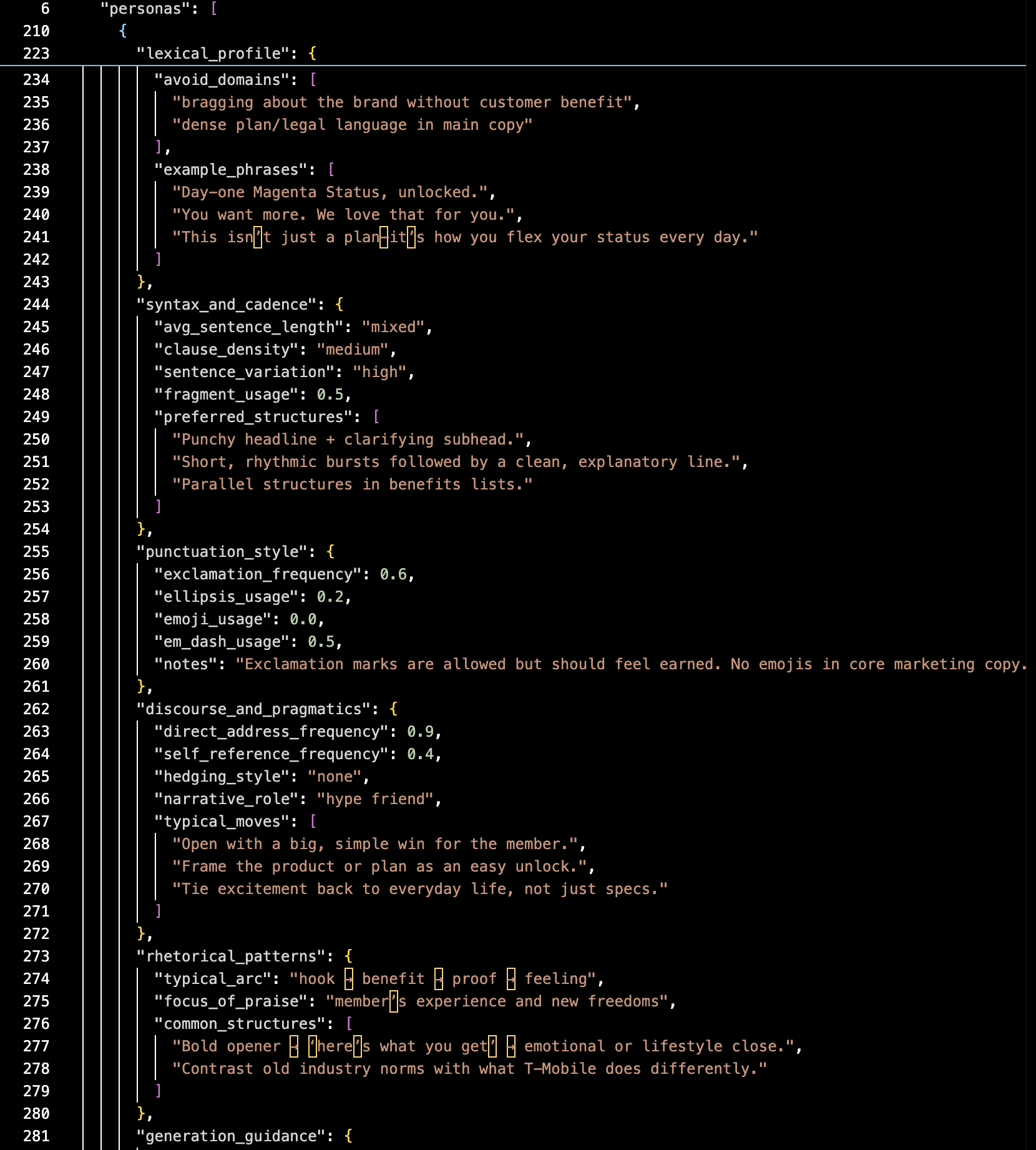
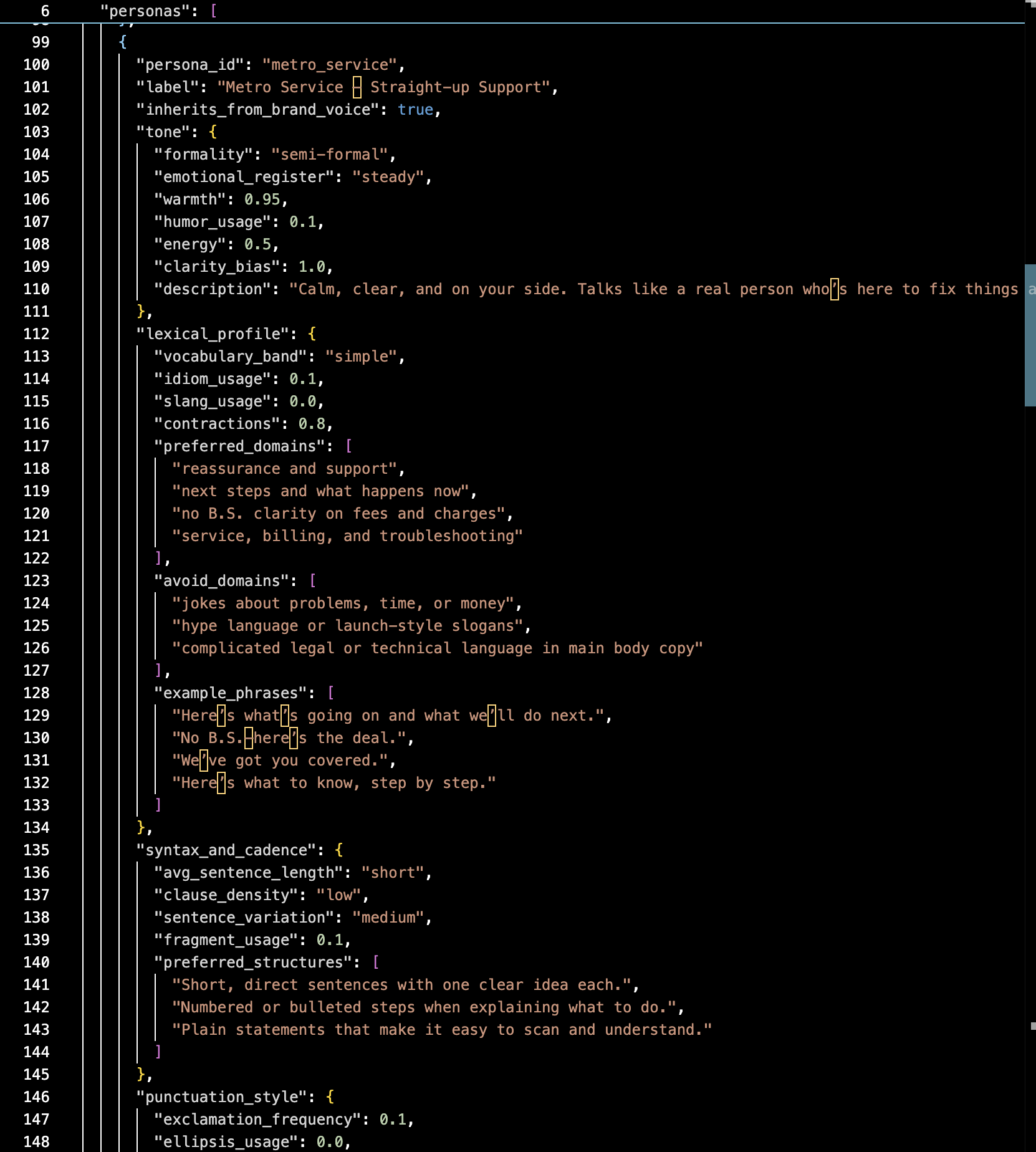
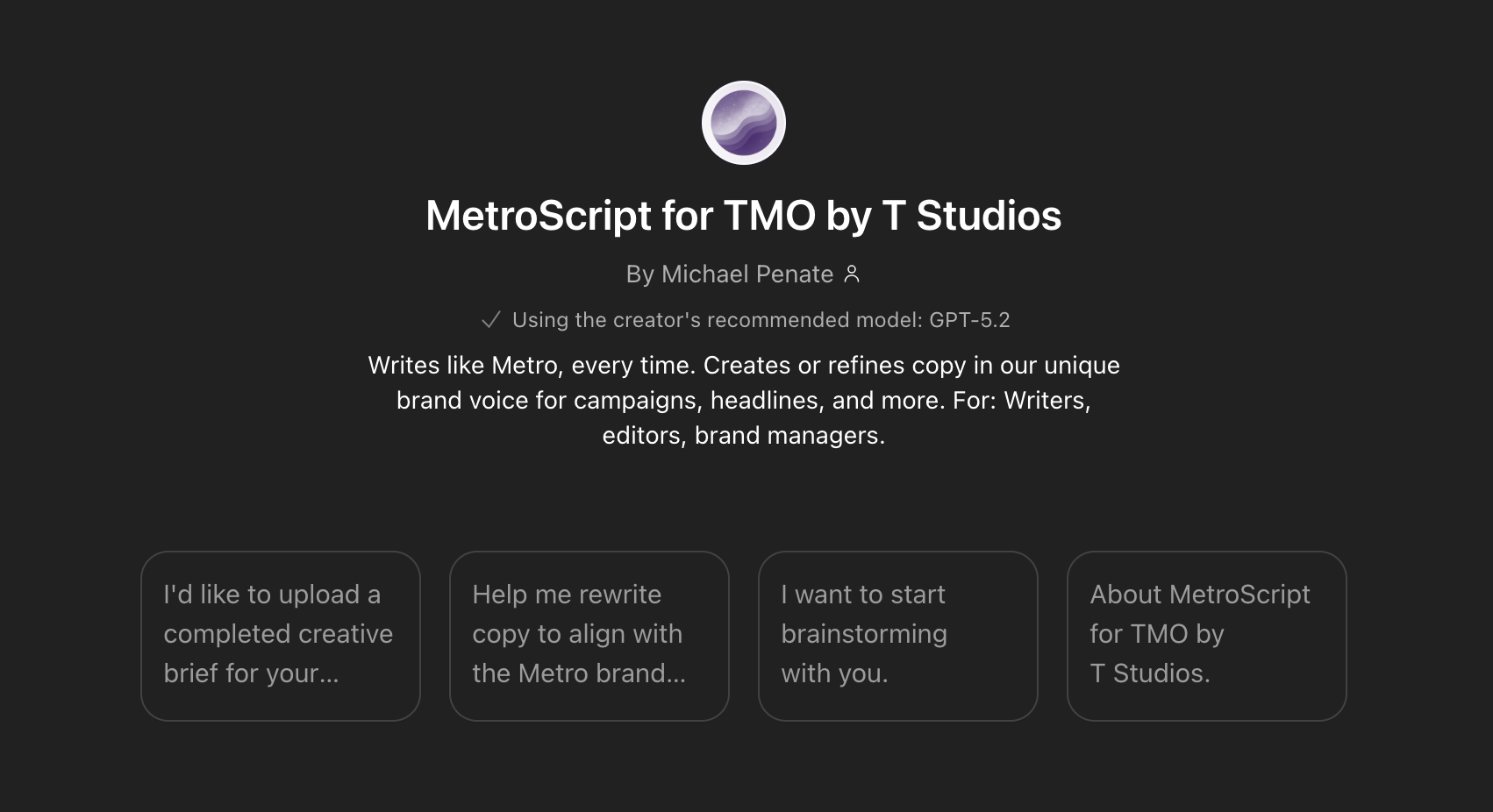
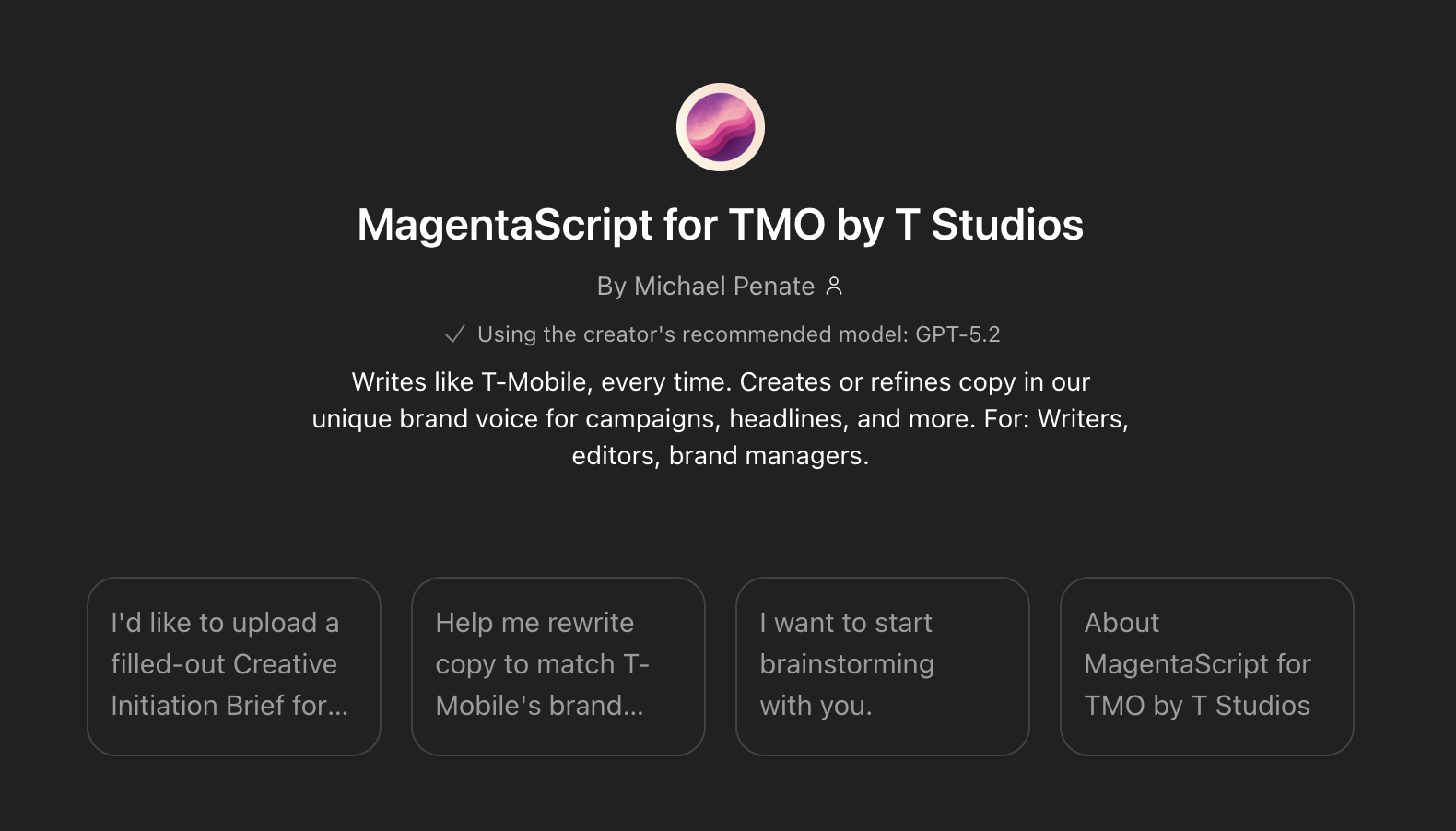
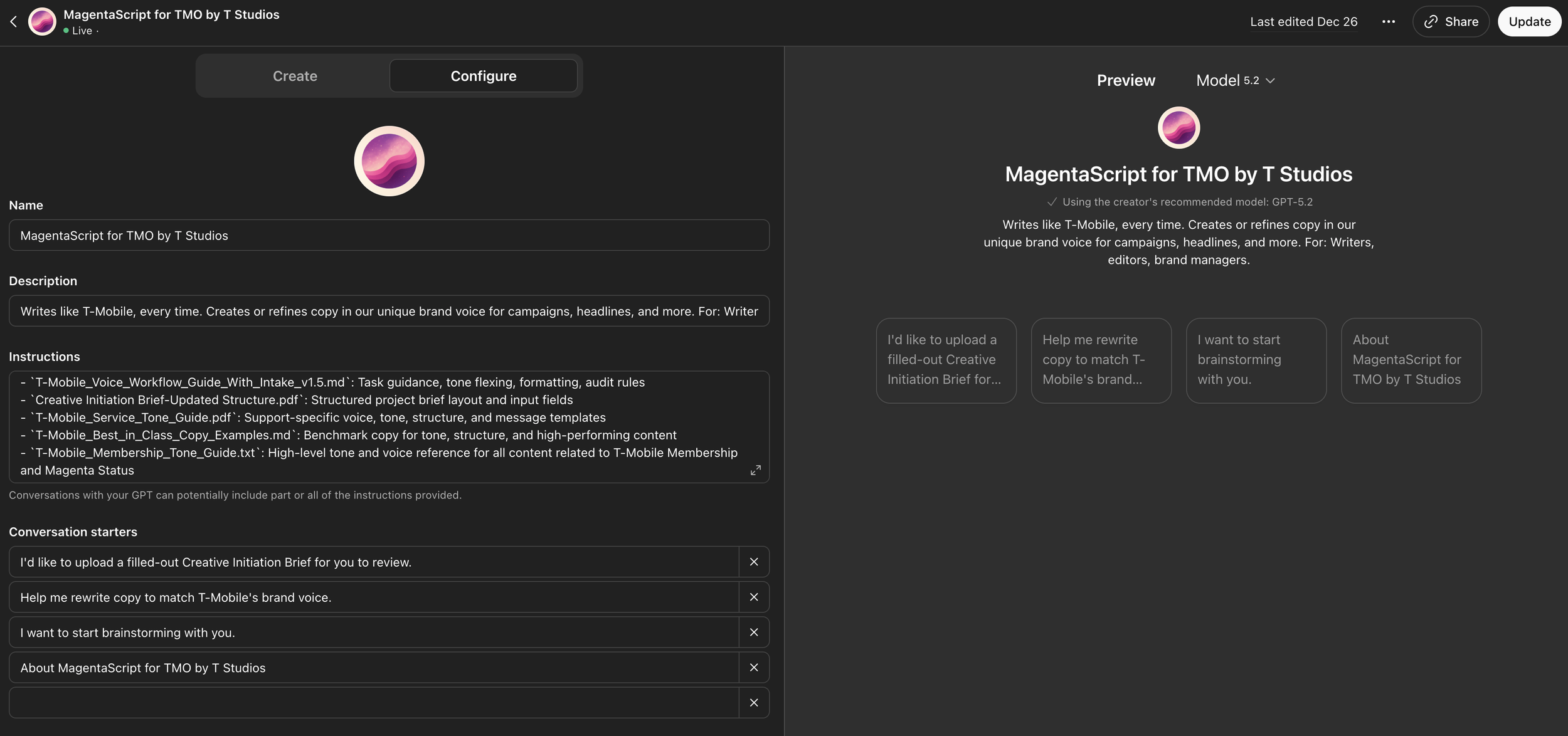
Two internal tools—MagentaScript and MetroScript—were developed using OpenAI-based models and tailored specifically to each brand’s voice system. Rather than generating generic copy, these tools embedded approved language patterns, tonal boundaries, and contextual guidance directly into writer workflows.
The systems enabled writers to draft, revise, and evaluate copy against brand-specific voice profiles in real time. This approach shifted brand voice from a static reference into an operational layer—one that could be applied consistently across teams, channels, and use cases without slowing creative output.
Governance, Enablement, and Scale
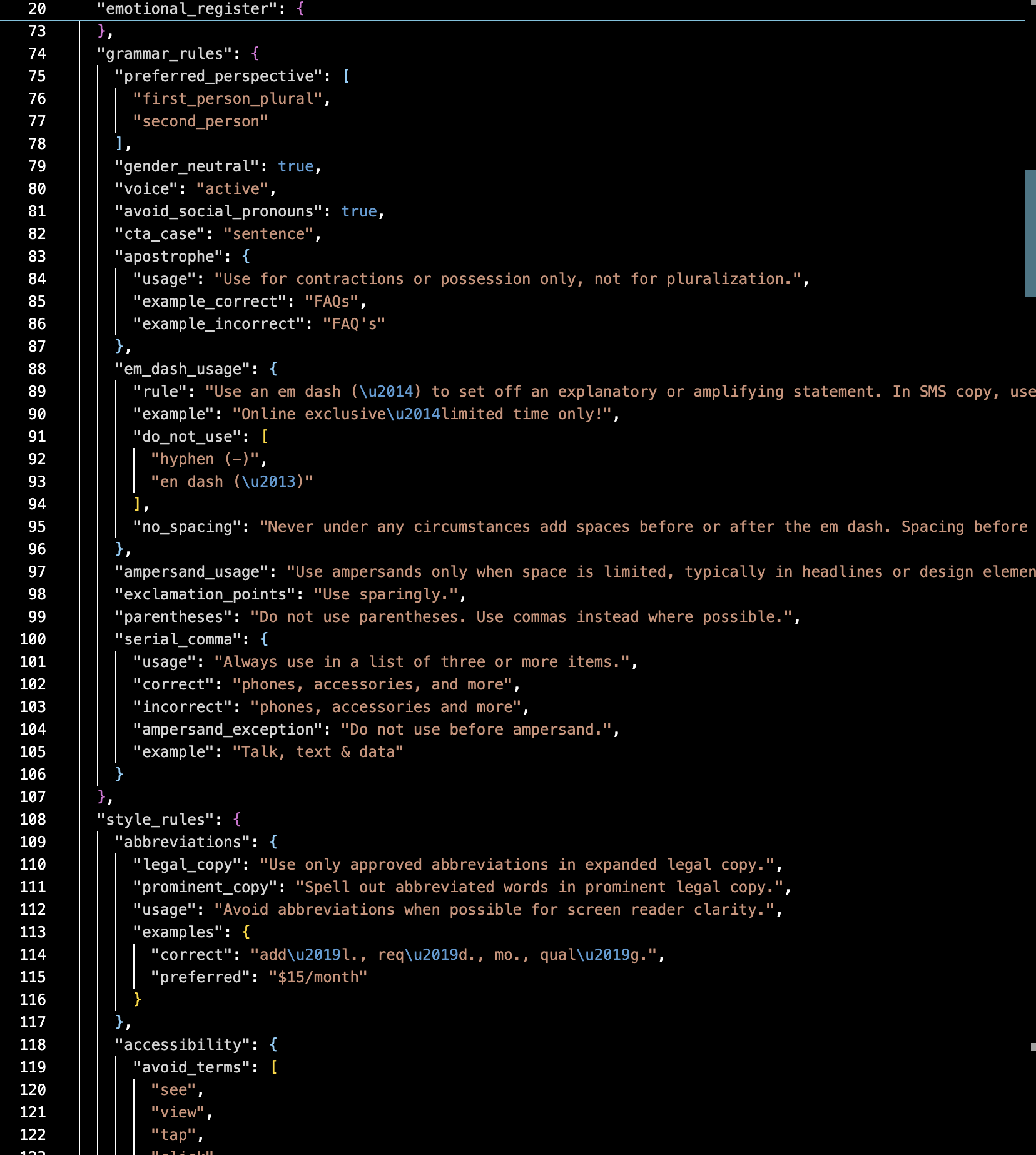
The tools were designed to support governance without enforcement fatigue. By encoding voice principles at the stylometric level, the systems reduced subjective interpretation and made expectations legible to both new and experienced writers.
This work also enabled significant SaaS cost avoidance by replacing a more expensive external AI solution with an internally managed platform. In-sourcing the capability allowed the organization to retain control over data, customization, and evolution while materially reducing ongoing operational costs.
Organizational Impact & Recognition
The success of this work led to Michael being recognized as an AI MIX Champion within the marketing organization. He was invited to share the systems with a small group of internal AI tool developers focused on accelerating T-Mobile’s transition toward a more data-informed and AI-enabled operating model.
These sessions positioned language systems alongside analytics and tooling as a core component of how the organization thinks about scale, consistency, and creative velocity.

Outcome
The result was infrastructure that strengthened judgment. Writers moved faster with greater confidence. Brand voice became measurable without becoming mechanical. AI functioned as an enabling layer that reinforced standards rather than replacing human decision-making.
When AI solutions are designed with intention, language becomes more resilient, not less human.